Renegades was Destiny 2's first—and last—crack at developing a release that was somewhere between what a traditional “seasonal” release would be and what a full, year-long-production cycle “expansion” release was. In this Star Wars-inspired release, the player character can align themselves with one of three Syndicates fighting for control over intelligence and resources on remote destinations via methods that are not, strictly speaking, the “right” way of doing things. And, what's more: players can change their Syndicate allegiances, double-crossing their temporary allies for their own gain.
For this release, Neon continued to lead their team's crew of three Technical UX Designers by delegating work, providing mentorship, and putting their focus toward high-impact areas where their expertise could make or break a feature. Delegation was even more crucial than before: Renegades had a shorter development cycle than past releases, and Neon's ability to work quickly & prudently without supervision was critical in supporting designers who were executing sentiment-driven follow-up work to The Edge of Fate's scoring system while the rest of their team moved forward.
Lawless Frontier
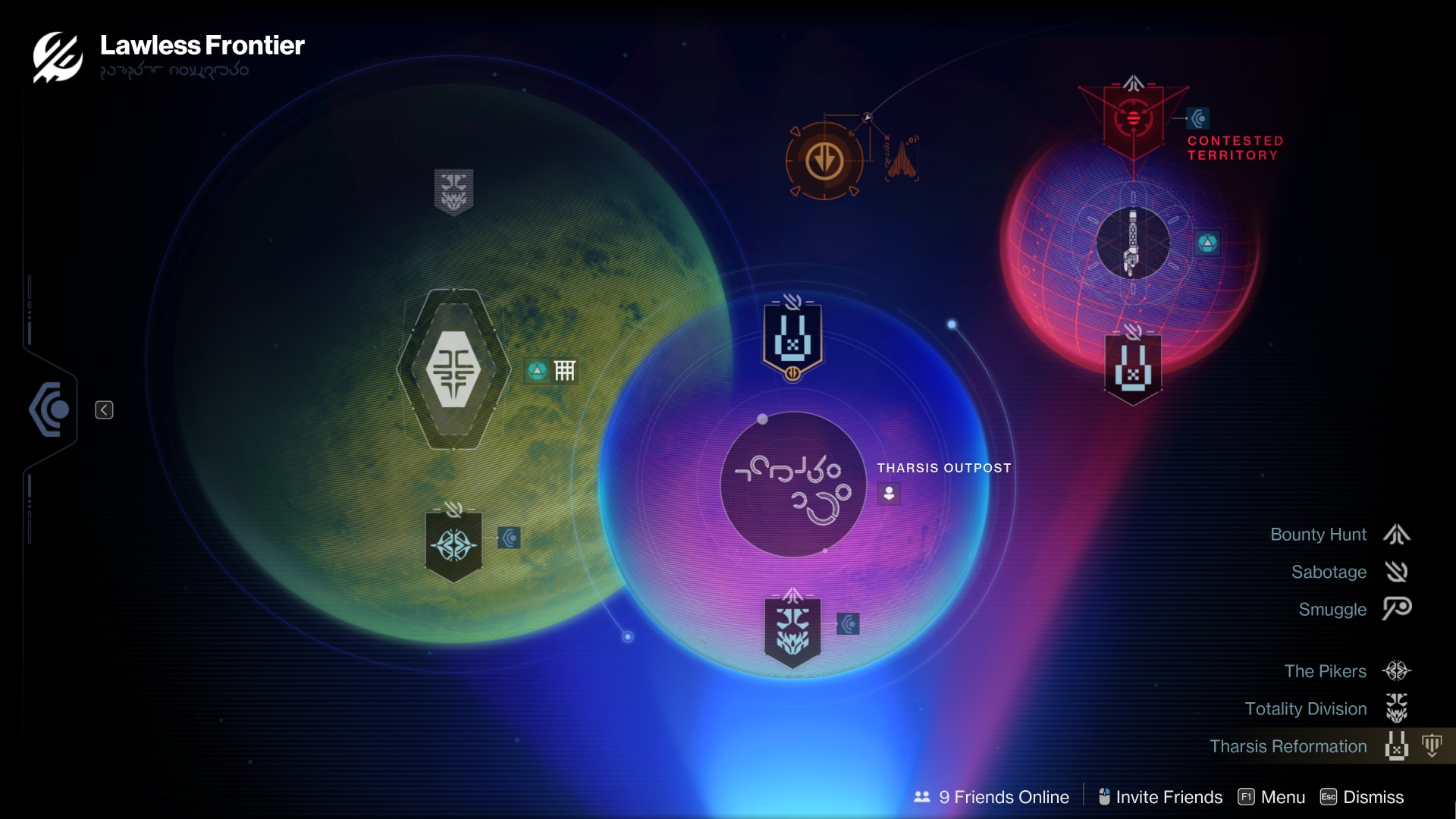
“The Lawless Frontier” was the collective name for the group of destinations where the Renegades release occured: a set of locales where the risk and reward are high, the oversight is slim, and players might be working with the Totality Division one day before betraying them to work with The Pikers the next.
Striking the right balance between the visual identity of Destiny 2's Director interface and Star Wars' hologram-style or wireframe-y renderings of planets was a challenge, with Art disciplines taking multiple iterations to thread that needle. Once a visual direction was locked in, the team began firing on all cylinders.
Fresh out of follow-up work on The Edge of Fate's Activity Customization system for the seasonal release before Renegades, Neon worked with stakeholders to carve out focused time to identify, plan, and execute the work to take early iterations of the planets and ensure their visuals would land with players. Working directly with their team's Visual Designers to close the gap between what was desired and what was possible, they wrote new shaders—and made targeted updates to existing shaders—to upgrade the lighting, tighten up the scanline effect, improve the transparencies and color grading, and dial in the alternate “Contested Territory” presentation for each of the planets.
Credits
| UX Design | Anna Parmentier, Graeme Goodman |
|---|---|
| Visual Design | McKenna Morison, David Castillo |
| Technical UI/UX Design | Neon O'Dea, Tyler Zwiers, Zoe Soroka |
Contested Territory
In Renegades post-campaign experience, the Lawless Frontier shifted into a new mode where the Syndicates more actively attempted to seize power for themselves. This manifested in “Contested Territories”, areas of each planet where the skirmishes were particularly active. Over time, these rotated; the previously-contested area became inactive for missions due to increased presence from authorities attempting to restore order while the Syndicates moved on to contest another space.
Credits
| Visual Design | David Castillo |
|---|---|
| Technical UI/UX Design | Neon O'Dea, Zoe Soroka |
Tharsis Outpost
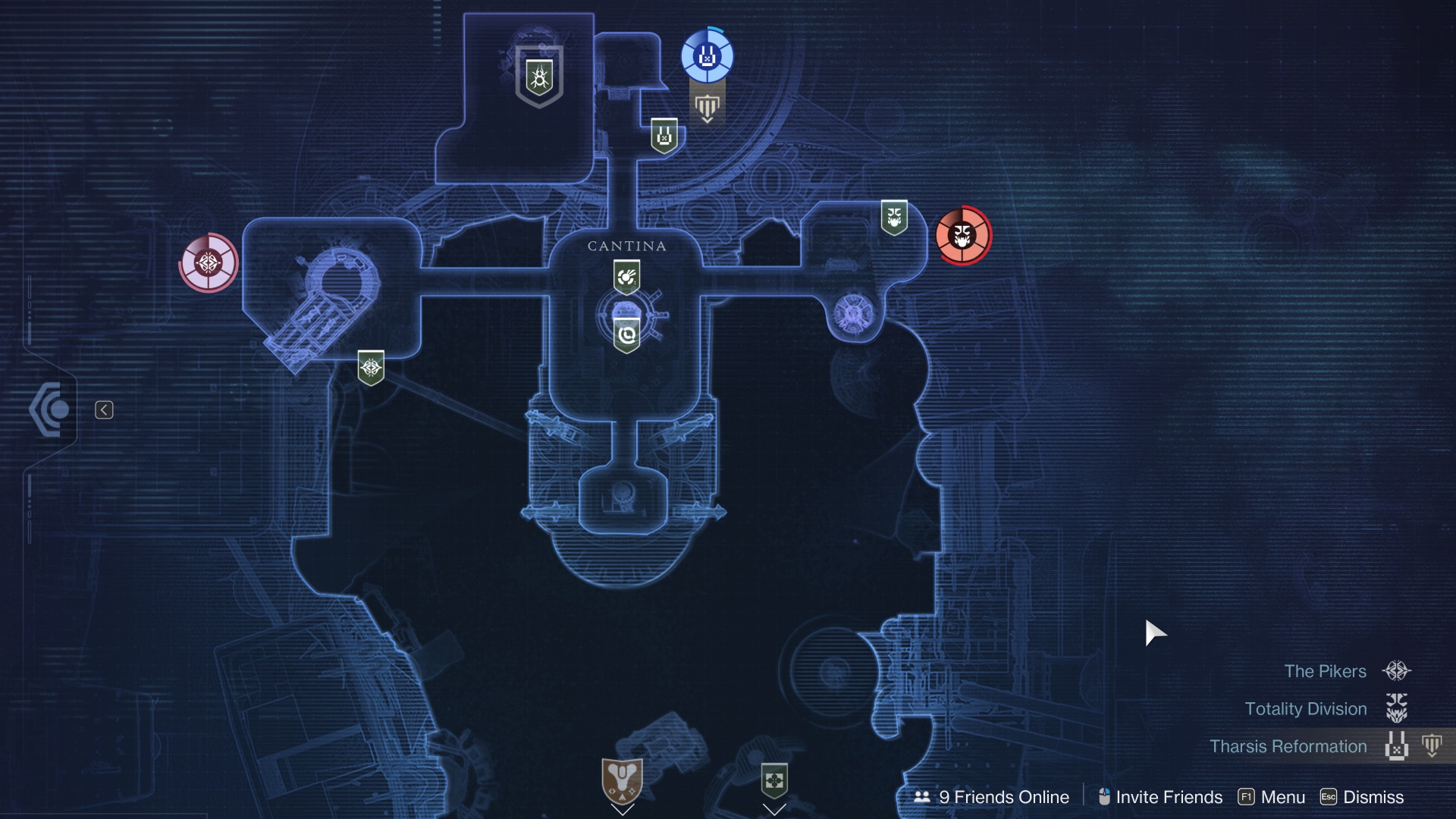
What's a Destiny 2 release without a map? While Renegades did not have a freeroam destination like past expansions, it did introduce a new social space: the Tharsis Outpost, a neutral zone where even the Syndicates had to keep their weapons holstered. It had everything a renegade could possibly want: a landing pad, a cantina, a bazaar, a crime lord, community theatre, and three fully-kitted-out Syndicates worth of smugglers, bounty hunters, and weapons enthusiasts ready to give you credits in exchange for help with their hobbies.
As the UI Team's map implementation specialist, Neon built and calibrated the map for Tharsis Outpost.
Syndicate Reputation
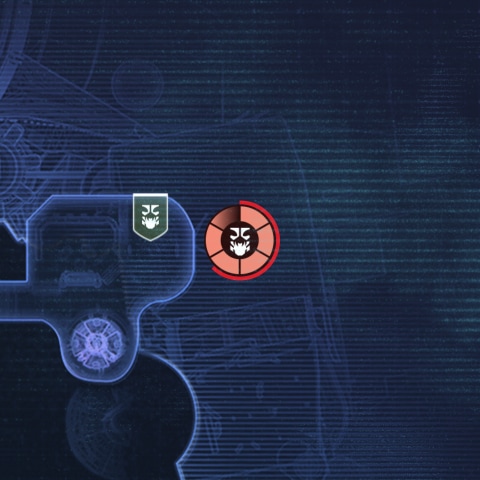
Most destinations in Destiny 2 had at least one faction reputation system, but Renegades had three in a post-campaign loop focused on engaging, and competing, with each of them to gain rewards. As such, the player needed to be able to easily compare their progress with each Syndicate; the existing pattern of showing reputation progress in tooltips was simply not going to cut it for this release.
Working with UX and Visual Designers, Neon built out these reputation displays that could live on the Tharsis Outpost map directly next to the areas where their respective Syndicates could be found. As they progressed through the main ranks of these factions, each wedge would fill in until players reached the final rank, which could be progressed infinitely for further rewards.
Finally, they worked with the release's Technical Designers to set these displays up to be hidden until players reached the post-game and properly joined a Syndicate for the first time. This kept players focused on what matters while they're engaging with the expansion's campaign missions.
Credits
| UX Design | Anna Parmentier, Graeme Goodman |
|---|---|
| Visual Design | McKenna Morison, David Castillo |
| Technical UI/UX Design | Neon O'Dea, Tyler Zwiers |